When Your Child Is Screaming on the Floor…
This Is the Exact Response That Helps Them Calm Down — Without Yelling, Giving In, or Walking Away
🔒 100% Secure 256-Bit Security Encryption
If tantrums leave you frozen, second-guessing yourself, or emotionally drained…
you’re not failing.
You’re just missing a clear response system.
Most parents aren’t taught what to do in the moment — when emotions are high, your child is overwhelmed, and your own nervous system is stretched thin.
That’s what this guide is for.
Tantrums Aren’t the Problem
Not knowing how to respond is.
You’ve probably tried some version of all of this:
Explaining calmly (while your child screams louder)
Giving in “just this once” to stop the meltdown
Walking away because you’re about to lose it
Yelling — then feeling awful afterward
And afterward, the same questions come back:
Did I handle that right?
Am I teaching bad habits?
Am I being too strict… or not strict enough?
This constant uncertainty is exhausting.
And it makes tantrums feel bigger than they need to be.
JOIN NOW FOR $27
You're Saving $500+ Today
Join The Tantrum Response Algorythm For $27
Bonuses Will Be Delivered Instantly.
Get Full Access Right Away.

🔒 100% Secure 256-Bit Security Encryption

What If You Knew Exactly What to Do — Every Time?
Not a vague principle.
Not a reminder to “stay calm.”
But a clear response you can follow even when your child is screaming and your nervous system is lit up.
What changes everything isn’t trying harder or being more patient — it’s having a repeatable way to respond. When you know what comes next, you stop improvising under pressure. You stop second-guessing yourself. And instead of reacting, you respond with steadiness and confidence.
That’s what makes tantrums feel manageable again. Not because they disappear overnight, but because you’re no longer facing them without a plan. You know what to do — and that changes everything.
Introducing the Tantrum Response Algorithm
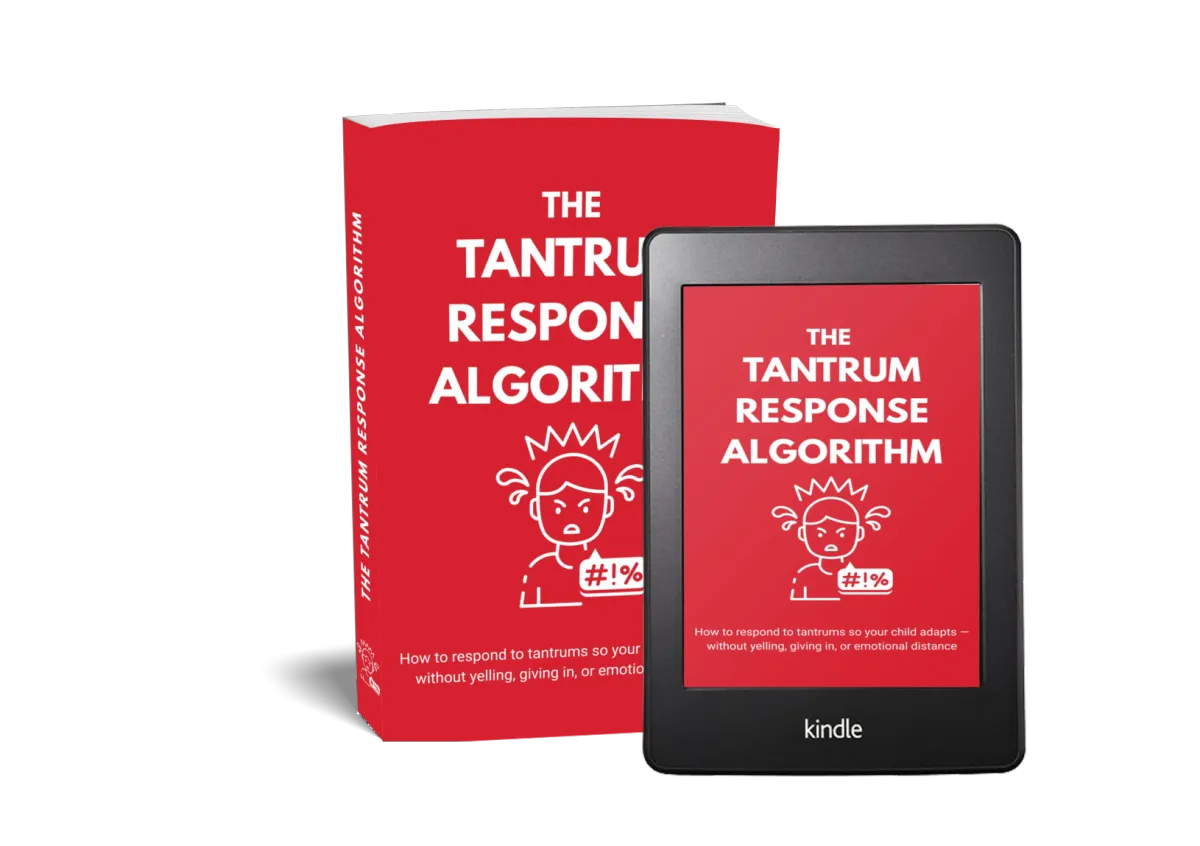
That’s why I created the Tantrum Response Algorithm.
It’s a short, practical guide designed to give you one clear way to respond when tantrums happen — so you’re not guessing, improvising, or second-guessing yourself in the moment.
The Tantrum Response Algorithm shows you how to move from “I don’t know what to do right now” to “I know exactly how to respond” — starting with your very next tantrum.
It’s not about stopping emotions, fixing your child, or staying perfectly calm.
It’s about having a steady, repeatable response that keeps boundaries firm while helping your child feel safe enough to calm down and adapt.
No punishment.
No ignoring.
No long explanations that don’t land.
Just a response you can rely on — even when you’re tired, overwhelmed, or unsure.
You will know:
What to do first
What not to do (even if it feels tempting)
What to say — and what to avoid saying
How to hold a boundary without escalating the meltdown
The first effect most parents notice is a sense of relief.
Tantrums no longer feel like emergencies you have to survive or fix. When a meltdown starts, you’re not scrambling for the right words or wondering if you’re doing damage — you know how to respond. Your body stays calmer, your voice stays steadier, and even if your child is still upset, you feel grounded instead of panicked.
Over time, the effect deepens.
Tantrums lose their power, not because your child stops having emotions, but because those emotions are met with consistency and safety.
Boundaries become clearer.
Power struggles fade.
And instead of ending each meltdown with guilt or doubt, you walk away knowing you handled it in a way that protects both your child’s emotional development and your relationship with them.
INCLUDED WITH YOUR ORDER
The Tantrum Response Algorythm Bundle


BONUS #1: The Tantrum Language Cheat Sheet
Exact phrases that help your child feel understood without giving in.
BONUS #2: The 5 Most Common Tantrum Mistakes (and What to Do Instead)
The subtle mistakes loving parents make without realizing it.
BONUS #3: The “I’m Triggered” Parent Reset (2-Minute Calm)
A quick reset you can use when irritation or overwhelm rises.
The Old Way:
Guessing in the Moment and Hoping for the Best
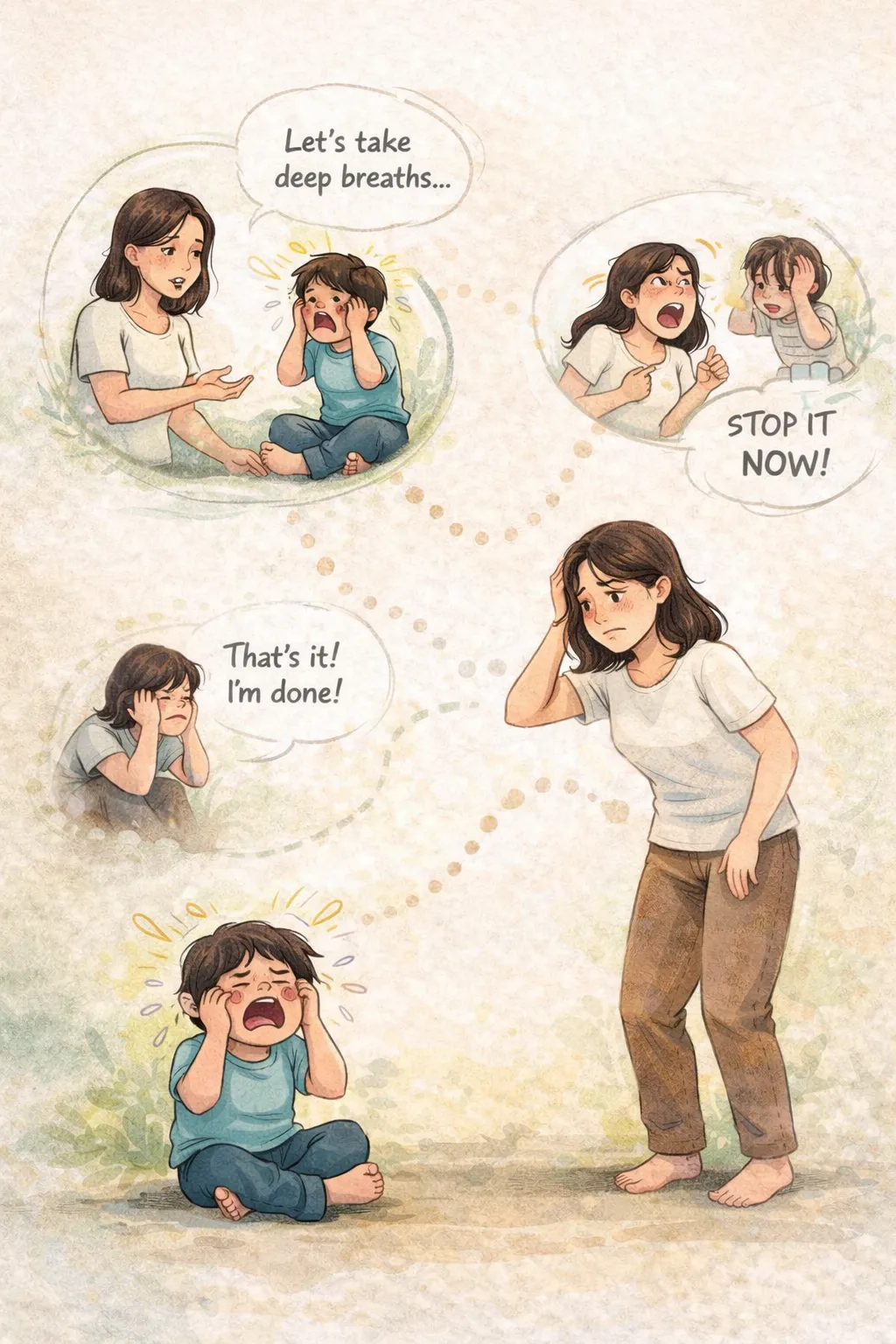
The old way of handling tantrums usually looks like this:
You’re standing there while your child is crying, screaming, or collapsing on the floor… and you’re trying to figure out what to do while it’s happening.
So you reach for whatever comes to mind.
You explain calmly — but your child can’t hear you.
You repeat yourself — louder this time.
You offer solutions — “Let’s do this instead.”
You threaten consequences — then regret it.
You give in — just to make it stop.
Or you walk away — because you’re afraid you’ll lose control.
None of it feels right.
And afterward, you’re left with that heavy feeling:
Did I just make this worse?
Am I teaching bad habits?
Why does nothing work consistently?
The hardest part isn’t even the tantrum itself. It’s the constant second-guessing.
THE NEW WAY
(stop tantrums - FAST!)
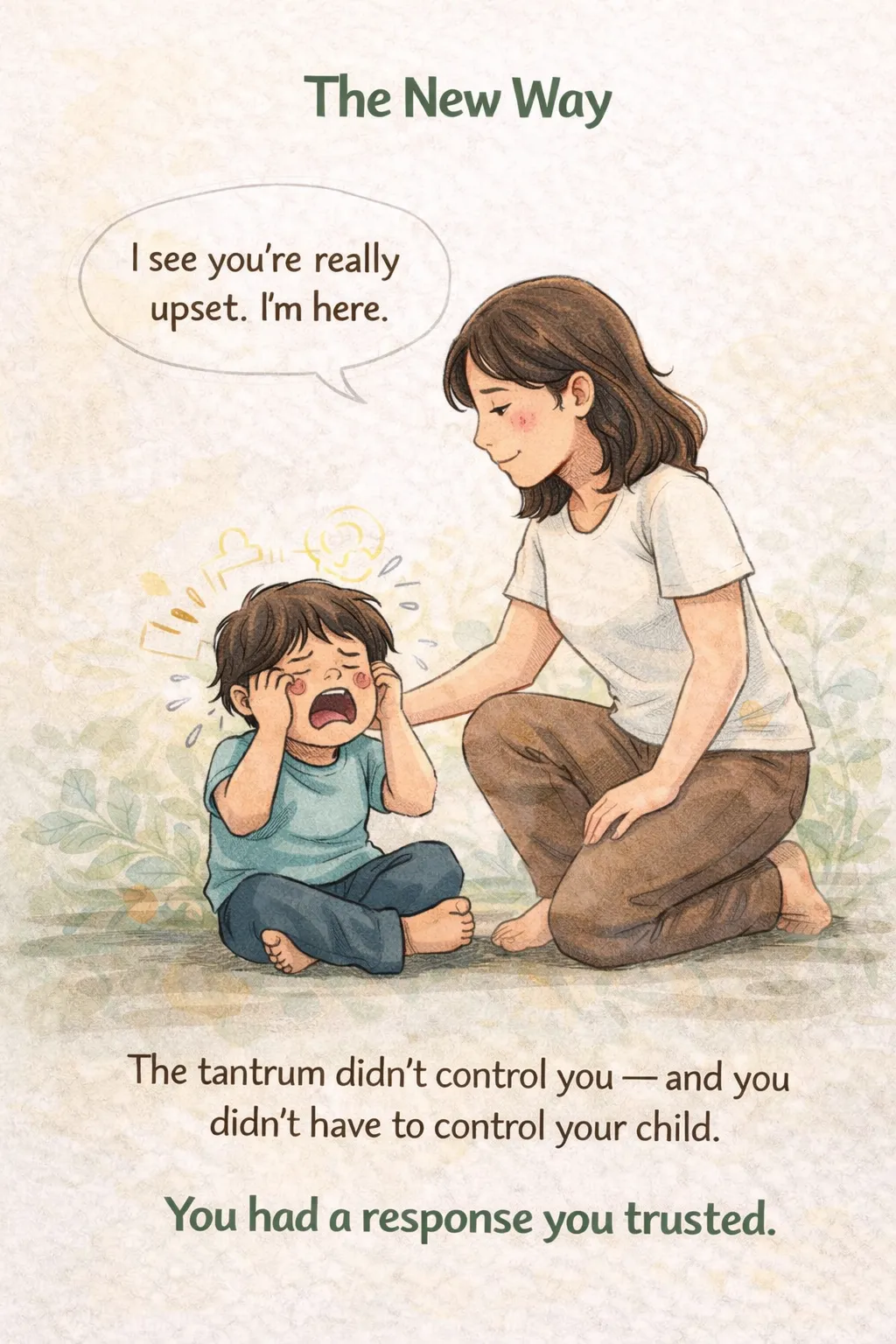
The new way feels different immediately.
A tantrum starts, and instead of panicking, you pause. You don’t have to decide what to do — you already know. The boundary stays firm. Your voice stays steady. You stop explaining, fixing, and negotiating, and you simply respond.
Your child is still upset — and that’s okay. You stay present without giving in. You name what they’re feeling. You offer connection. You wait. And slowly, the intensity softens. Not because you forced it to stop, but because your child feels safe enough to adapt.
Afterward, there’s no replay in your head. No guilt spiral. No wondering if you made things worse. You might still feel tired, but you feel grounded. You handled it.
The tantrum didn’t control you — and you didn’t have to control your child.
You had a response you trusted.
Here's Everything You Get
When You Get Access To The Tantrum Response Algorythm Today
The Tantrum Response Algorithm (Core System)
$97 Value
A clear, step-by-step response you can follow in the middle of a tantrum — even when you’re tired or overwhelmed.
Help your child move from meltdown to adaptation
Stop guessing and start responding with confidence
The Golden Rule That Stops Power Struggles
$47 Value
One critical principle most parents unknowingly break — and why it keeps tantrums stuck.
How to keep limits firm without being harsh
What actually allows a tantrum to resolve
“Say This / Don’t Say This” Tantrum Scripts
$67 Value
Exact phrases that calm instead of escalate — so you’re never stuck wondering what to say.
Language that helps your child feel understood without giving in
A printable cheat sheet for real-life moments
Why This Works (Psychology Made Simple)
$49 Value
A short, clear explanation that removes guilt and helps you trust the process.
What’s happening in your child’s nervous system during a tantrum
How emotional regulation actually develops
Difficult Situations Playbook
$97 Value
Guidance for using the same algorithm in the hardest moments — without abandoning it.
You’ll understand what to do when tantrums happen very frequently, and how to respond without feeling like everything is spiraling.
How to react to public tantrums (stores, playgrounds, streets)
One-Page Quick Reference & Checklists
$47 Value
Simple summaries you can return to anytime emotions run high.
A “Am I doing this right?” checklist
Quick reminders for overwhelmed parents
If these elements were sold separately, the realistic value would exceed $500.
But this is not a bloated program.
It’s a focused tool.
So today, you can get the entire Tantrum Response Algorithm for:
$27
Less than:
One rushed parenting consult
One therapy co-pay
One emotional evening you wish you could redo
PLUS, join today and
you'll also get:
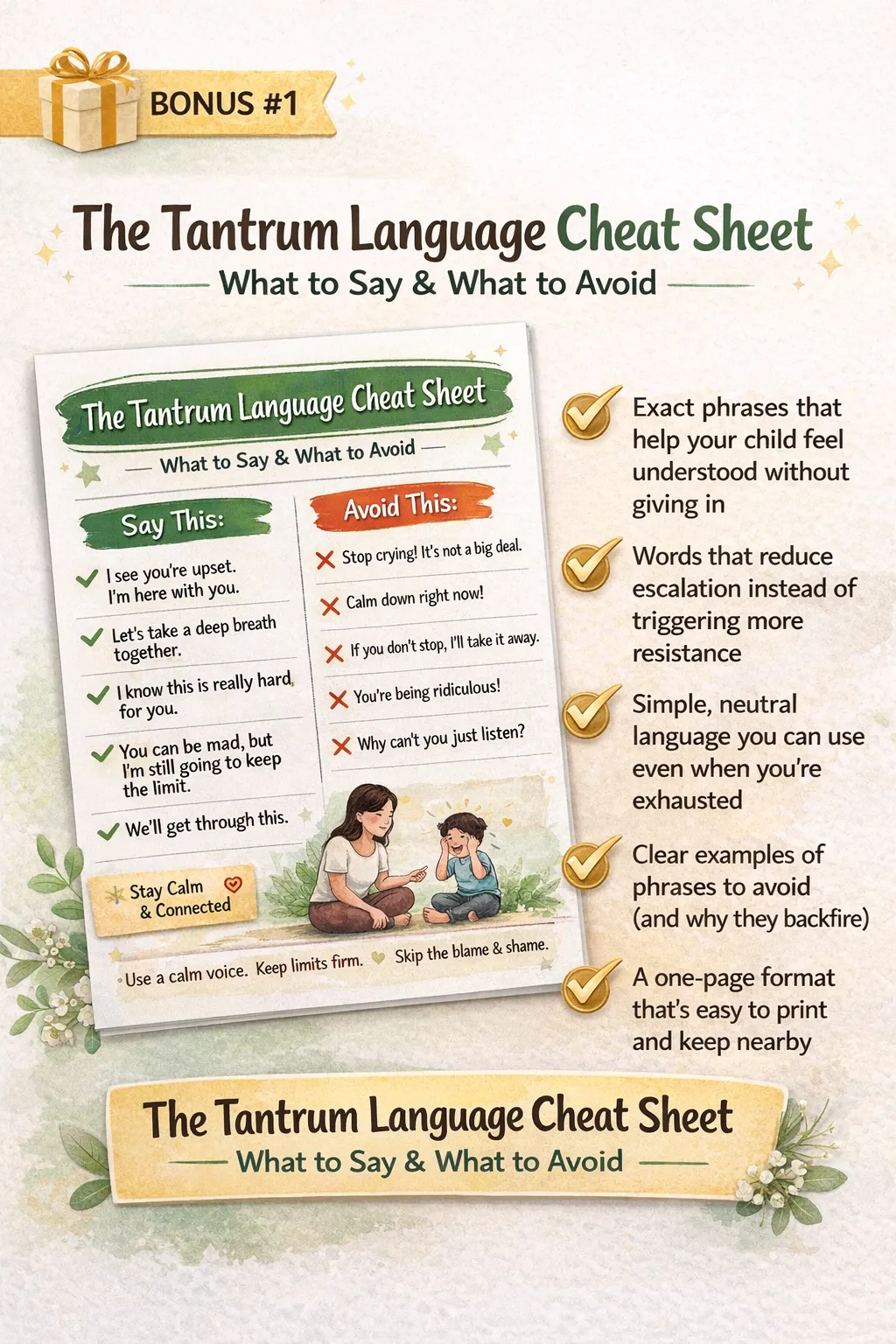
Bonus #1
The Tantrum Language Cheat Sheet
($37 Value)
Exact phrases that help your child feel understood without giving in
Words that reduce escalation instead of triggering more resistance
Simple, neutral language you can use even when you’re exhausted
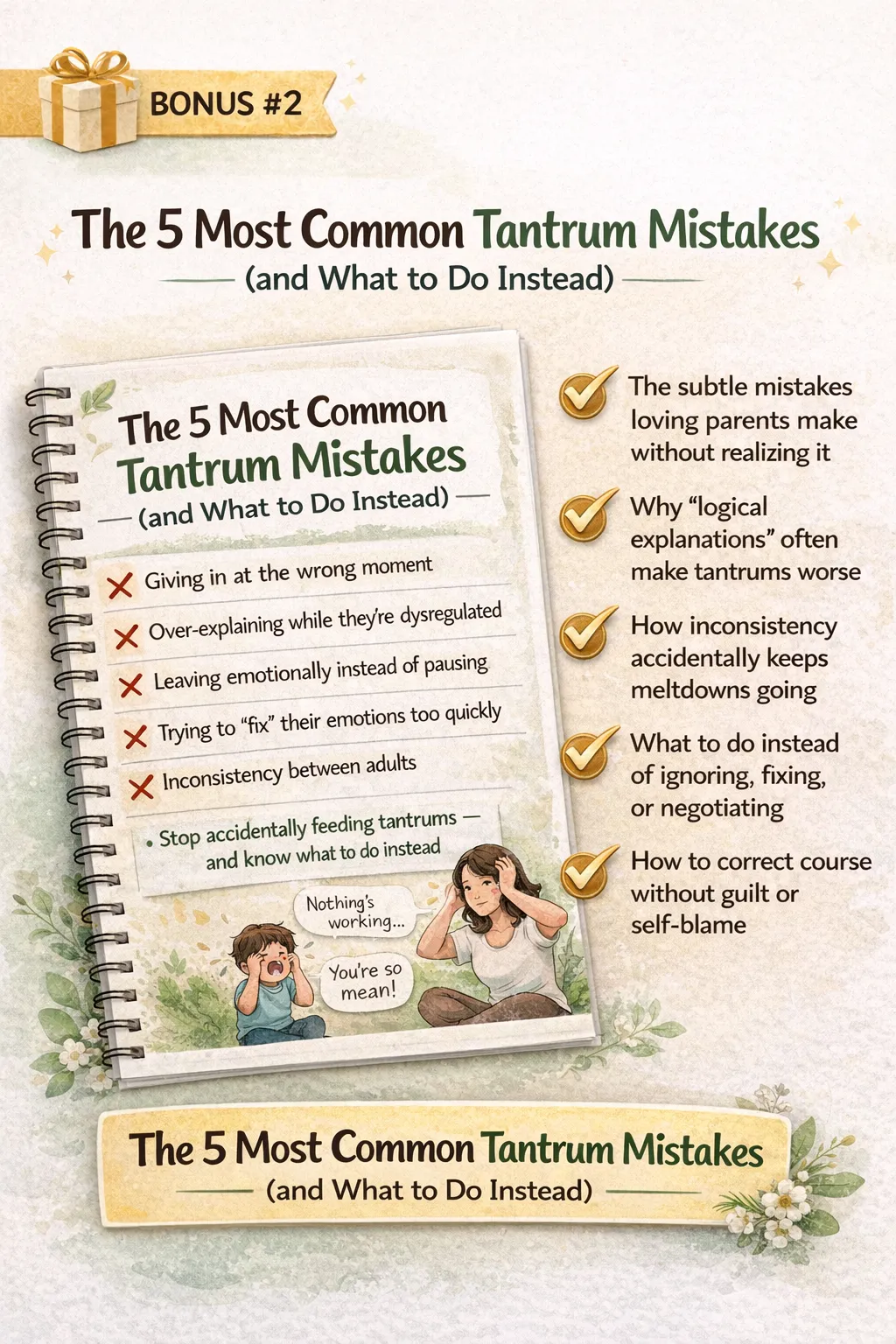
Bonus #2
The 5 Most Common Tantrum Mistakes (and What to Do Instead)
($67 Value)
The subtle mistakes loving parents make without realizing it
Why “logical explanations” often make tantrums worse
How inconsistency accidentally keeps meltdowns going
What to do instead of ignoring, fixing, or negotiating
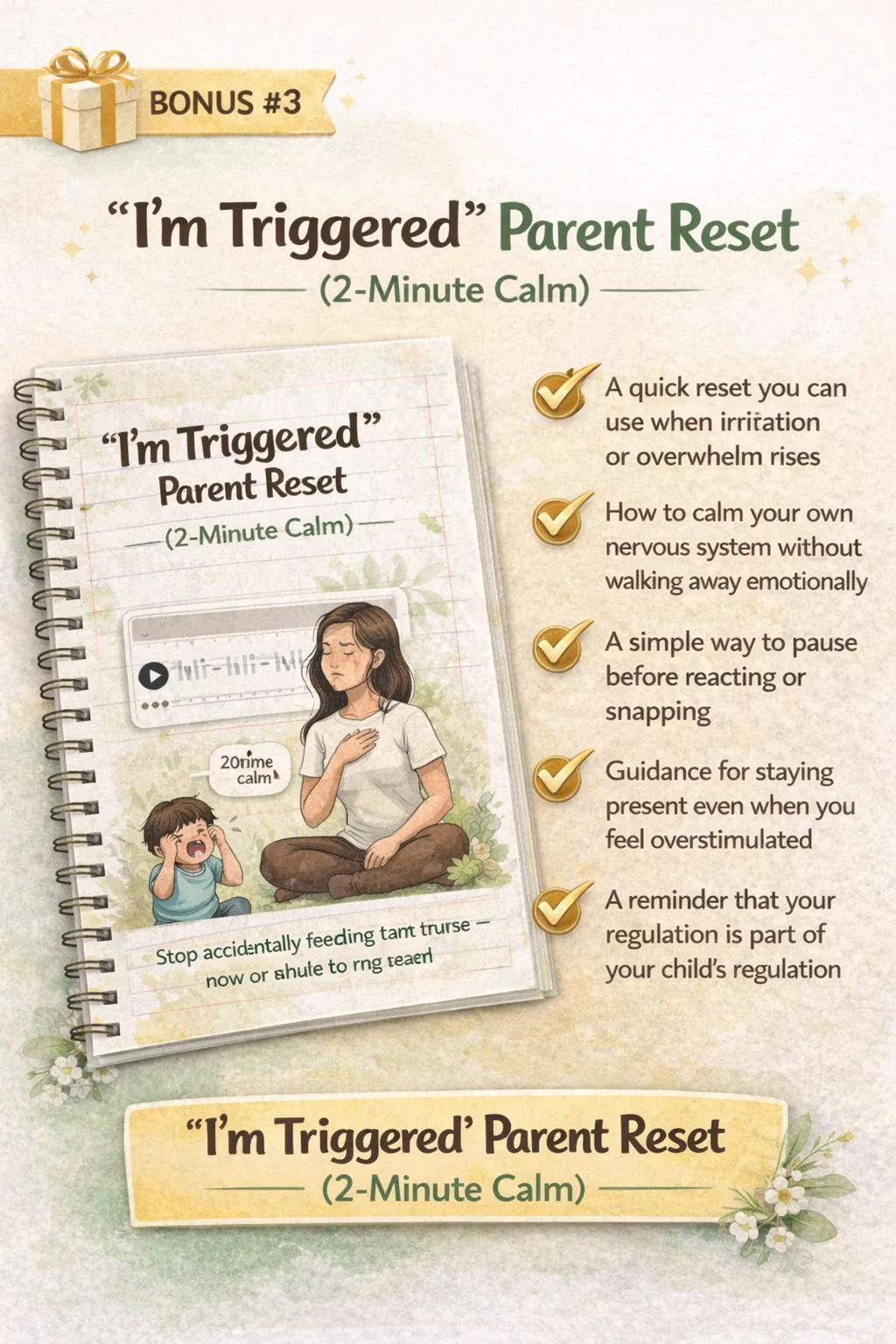
Bonus #3
The “I’m Triggered” Parent Reset (2-Minute Calm)
($97 Value)
A quick reset you can use when irritation or overwhelm rises
How to calm your own nervous system without walking away emotionally
A simple way to pause before reacting or snapping
Total Real-World Value: $497
Normal Price: $97
TODAY'S SPECIAL PRICE:
JUST $27
You Save: $497
100% Secure 256-Bit Security Encryption
product guarantee
You’re covered by a 14-day money-back guarantee. If you decide it’s not right for you, simply request a refund — no questions asked. There’s no risk in trying.
Exclusive Discount Expires In Just...
frequently asked questions
Will this work if my child has very intense or frequent tantrums?
Yes — and it’s often especially helpful in those cases.
The algorithm is built around how a child’s nervous system regulates under stress, not around “good behavior.” Intense emotions are not a problem here — they’re part of the process.
How fast will I see results?
Most parents feel immediate clarity and relief — often during the very next tantrum.
Behavioral changes happen over time, but the biggest shift is that you’ll know exactly what to do instead of guessing or panicking.
What if I try it and it’s not helpful for me?
You’re covered by a 14-day money-back guarantee.
If you decide it’s not right for you, simply request a refund — no questions asked. There’s no risk in trying.
still on the fence?
You're protected by my full money-back guarantee
You're getting $497 worth of value for just $27
This price won't last as we intend to charge $97 for this program soon!
Remember: When you enroll today, you'll also get access to the following bonuses - absolutely free!
Bonus #1: The Tantrum Language Cheat Sheet
A simple, one-page guide with exact phrases that calm your child instead of escalating the tantrum. You’ll know what to say — and what to avoid — even when you’re tired, triggered, or unsure. Perfect to print and keep nearby for real-life moments.
Bonus #2: The 5 Most Common Tantrum Mistakes (and What to Do Instead)
Learn the subtle but common mistakes parents make during tantrums — and why they accidentally keep meltdowns going. This bonus shows you what actually helps instead, so you can stop second-guessing yourself and feel confident you’re not making things worse.
Bonus #3: The “I’m Triggered” Parent Reset (2-Minute Calm)
A quick reset designed for the moment you feel overwhelmed, irritated, or close to losing your patience. This simple practice helps you regulate yourself first, so you can respond calmly instead of reacting — without ignoring your child or walking away emotionally.
NOW FOR ONLY $27
Join The Tantrum Response Algorythm For $27
You're Saving $497 Today
Bonuses Will Be Delivered Instantly. Get Full Access Right Away.
🔒 100% Secure 256-Bit Security Encryption

Copyright © 2026 | [Your Business Name] | All Rights Reserved
Privacy Policy | Terms of Service